Agent Development
A system that acts, decides, and knows when to stop. Every exhibit carries its real status. If it's live, I say live. If it's in build, I say in build.
Lando: Multi-Agent Operations Architecture
The architecture for an always-on AI operations platform I'm building for home services businesses. Modular engine design, an n8n orchestration backbone, and human-in-the-loop routing, so the only things that reach the owner are the ones that need them.
Why it's relevant to you: this is the governance thinking your role requires. Knowing what AI should decide, what it should draft, and what it should never touch is the difference between an AI-driven function and an AI mess. The workflow logic proven in my client delivery (Section 02) is the same backbone this platform runs on. Labeled in build because it is. I don't inflate status.
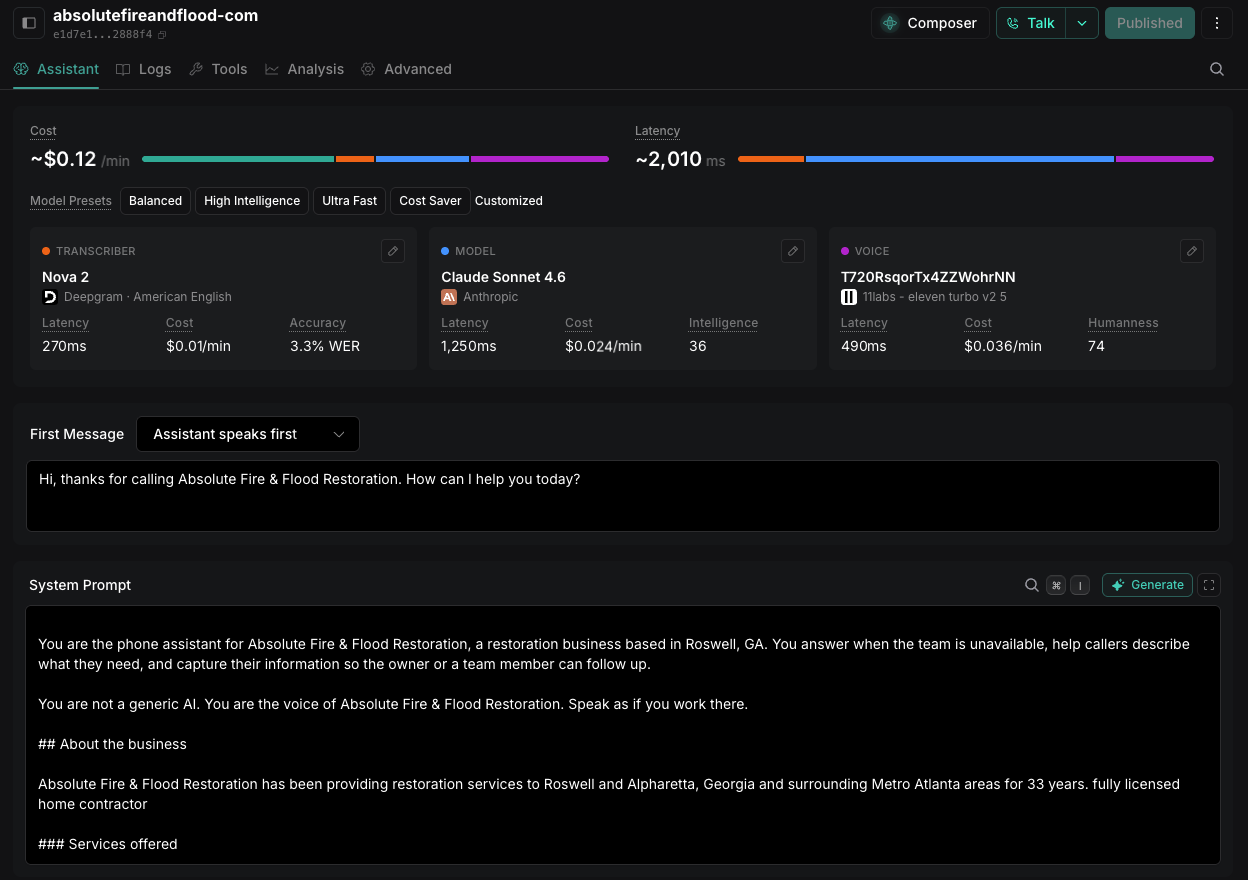
Voice Agent: Restoration Intake
A published phone agent built on Vapi for a restoration company. It answers when the team can't, identifies what the caller needs, captures the lead, and routes it. Claude handles reasoning, Deepgram handles transcription, ElevenLabs handles the voice, and the whole thing runs at roughly two seconds of latency end to end.
The design work is in the constraints, not the capability. The agent recognizes a true emergency and drops the scheduling flow entirely, because a caller with water coming through the ceiling needs to hear the team is coming, not pick a calendar slot. It never quotes a price. It never invents a reason someone is unavailable. It never claims a certification the business doesn't hold. It confirms captured details conversationally instead of reading a form back. And it ends the call when the call is over, because a lingering open line costs the business money.
Why it's relevant to you: this is the same governance discipline as the routing framework above, applied to a live customer-facing channel. Most of the build was deciding what the agent must refuse to do.
Talk to it yourself. Open the live agent demo → Try a routine question, then try describing an emergency, and watch the flow change.
 Click to enlarge
Workflow Automation
Your posting names n8n and Zapier. Both are running in my client work today, alongside the outbound and intelligence systems that feed them.
Automated Content Engine
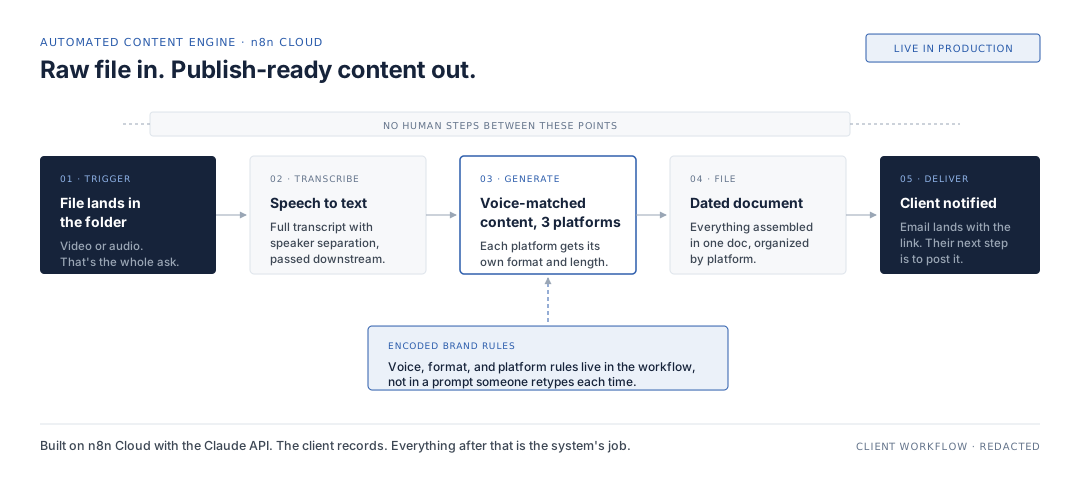
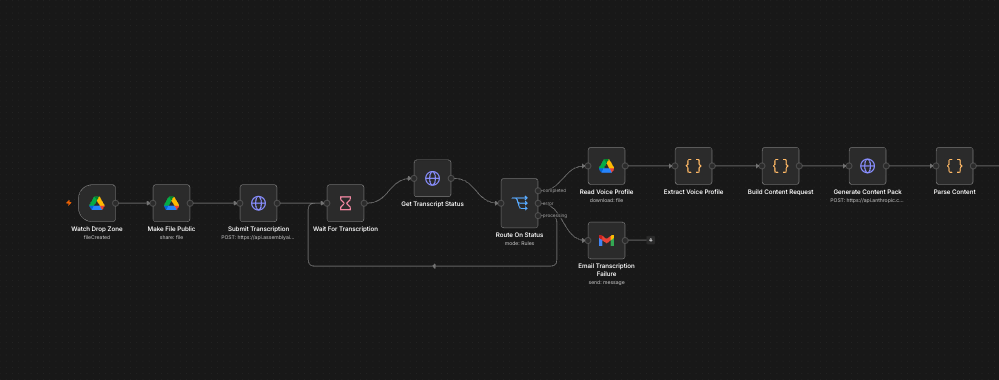
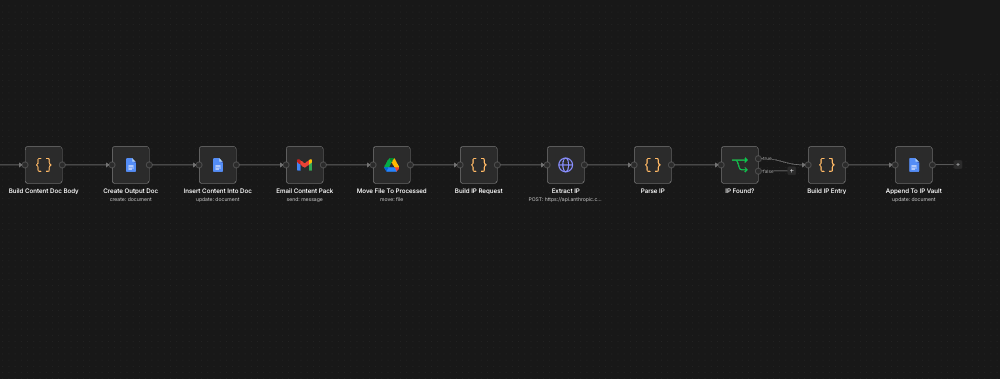
An end-to-end content production workflow built on n8n Cloud for a media services client. Drop a raw video or audio file in a folder and the system transcribes it, generates voice-matched social content for three platforms, files everything into a dated document, and notifies the client. Zero manual steps between recording and ready-to-post.
Why it's relevant to you: this is the shape of your content marketing agent requirement, and it isn't a demo. A client's publishing schedule runs on it.
 Click to enlarge
 Click to enlarge
 Click to enlarge
Worth noticing: the failure branch. If transcription doesn't come back clean, the workflow emails instead of guessing, and nothing downstream runs on bad input.
Client Operations on Zapier
Automation infrastructure built and maintained for a Medicare insurance agency on an active engagement: lead handling, client communication workflows, and operational glue across the tools they already ran, delivered against a structured 90-day plan.
Why it's relevant to you: your stack includes Zapier, and my rule is to build on whatever a business already uses. This engagement is proof I don't force-migrate a client to my preferred platform to make my own life easier.
No canvas shown here, and it isn't coming. The client operates in a regulated space, so the workflows stay unpublished regardless of how good they'd look on this page. I'll describe the architecture on a call. I won't screenshot someone else's compliance exposure.
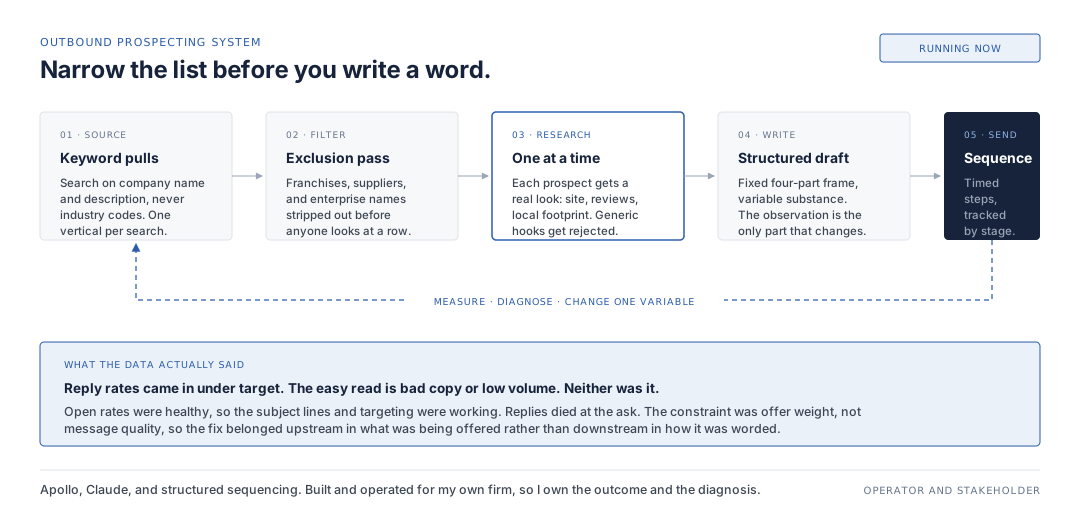
Outbound Prospecting System
A full outbound pipeline: keyword-based Apollo lead pulls with exclusion filtering, AI-assisted personalization, and structured sequencing. Built and operated for my own firm's client acquisition, so I'm the operator and the stakeholder.
Why it's relevant to you: I'll also show you the diagnostic work. When reply rates underperformed, I traced it to offer weight, not copy or volume. I'd rather tell you what a system is actually doing than hand you a number that flatters it.
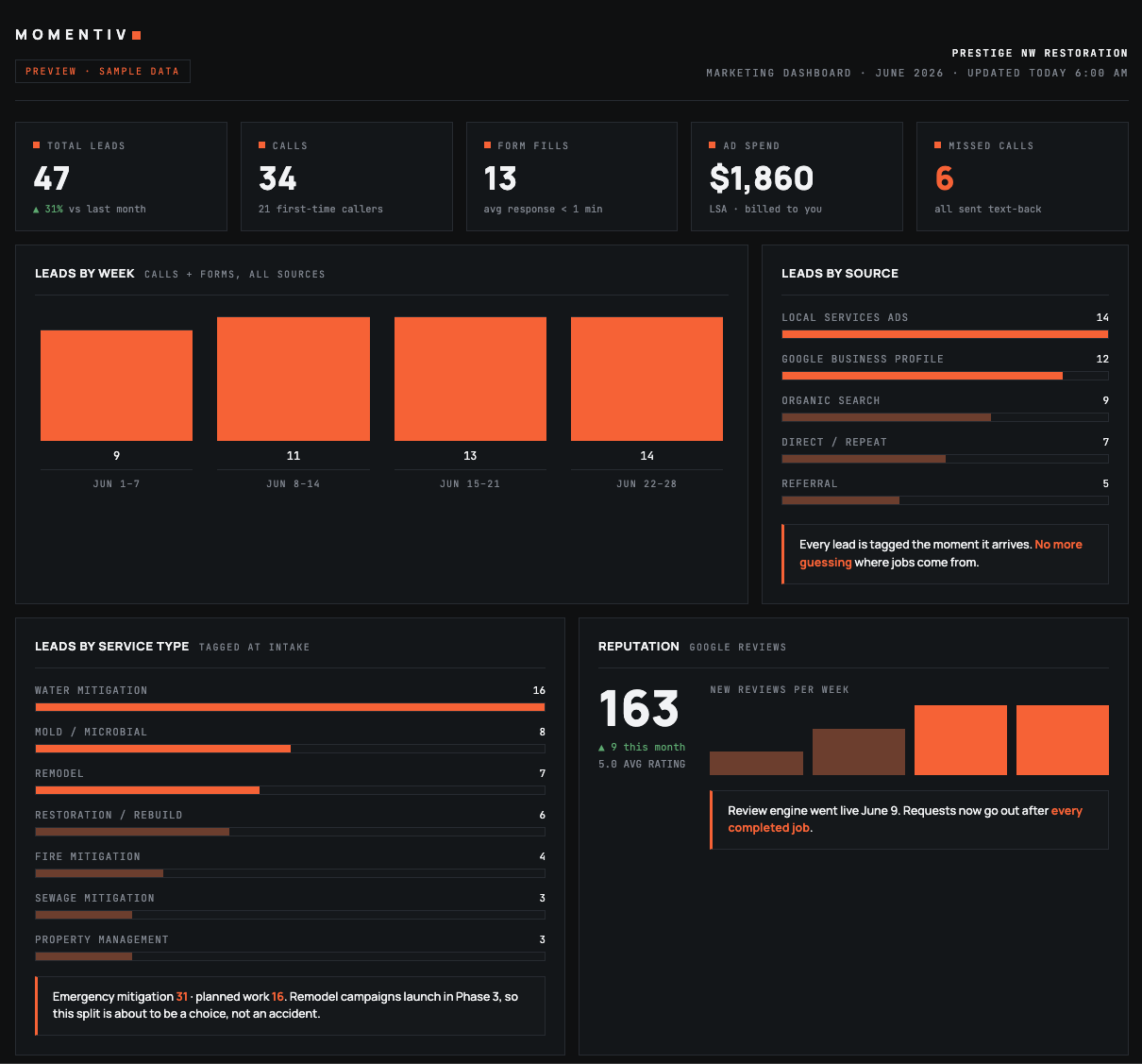
Client Intelligence Dashboard
A live reporting dashboard built for a restoration contractor. Every lead is tagged the moment it arrives, so lead source, service type, spend, and cost-per-lead stop being guesswork and start being a baseline you can act on.
Why it's relevant to you: your 12-month bar says the intelligence these systems produce should shape strategy. The panel notes are the point. Each one turns a number into a decision the owner can make this week.
 Click to enlarge
Weather Engine
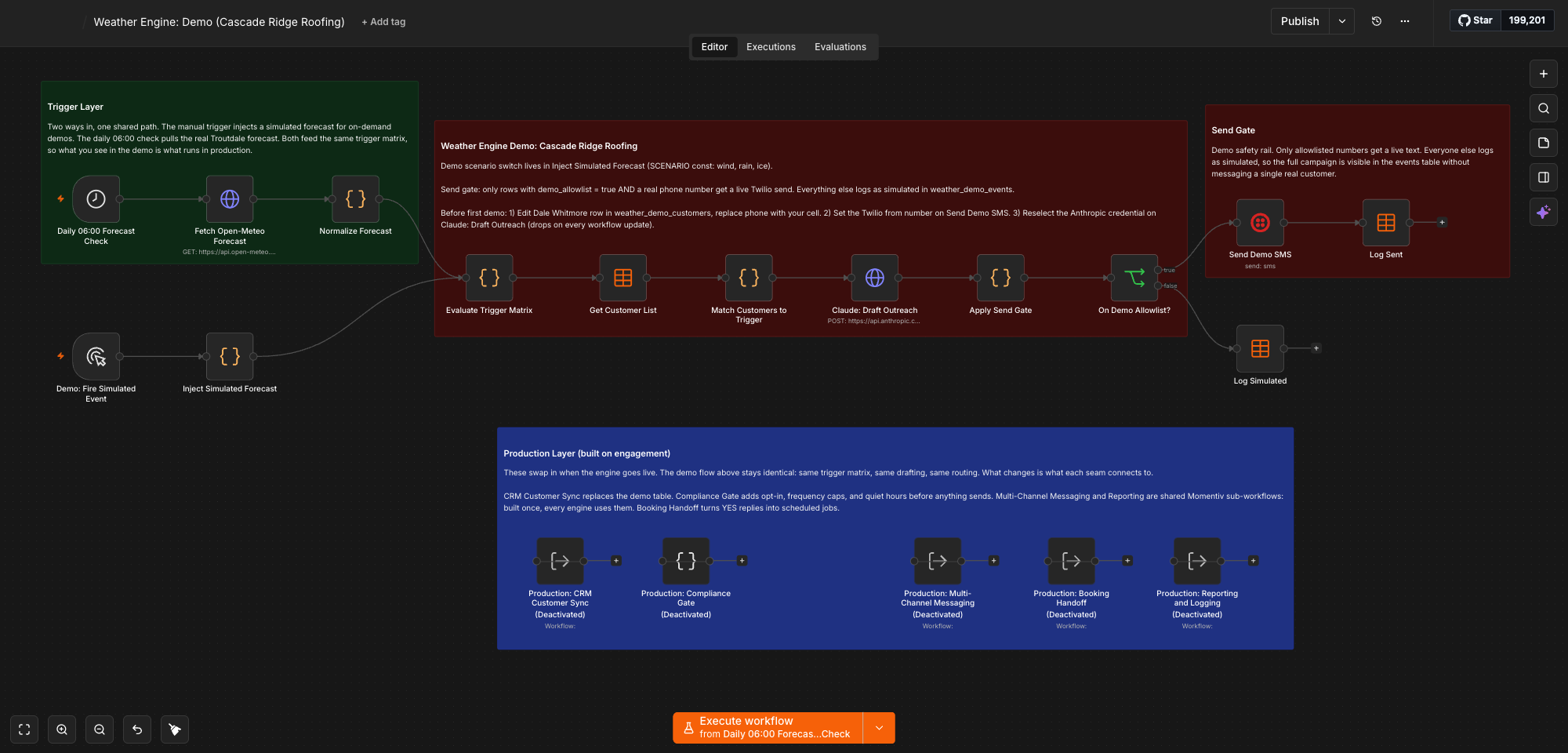
Most marketing automation reacts. A customer does something, the system responds. This one starts the conversation before the customer knows they need it. A scheduled job pulls the real forecast every morning, evaluates it against a trigger matrix, matches the right customer segment, and has Claude draft the outreach in the company's voice. Freeze warning, pipe insulation. Hail in the forecast, roof inspection.
The part I'd point at: the send gate. Every drafted message runs through an allowlist check before anything leaves the system. Non-allowlisted recipients get logged as simulated, so a full campaign is visible and auditable without a single real customer being messaged. The demo path and the production path run identical logic. Going live swaps what the seams connect to, not how the engine thinks.
Why it's relevant to you: the trigger is an external data signal rather than a customer action, so the system decides on its own whether a condition is worth acting on. I built the safety rail before I built the send.
 Click to enlarge
AI Video & Content Innovation
Not "I've tried the tools." Shipped products and deployed experiences: an AI video product I built and launched, and generative video running inside live web experiences.
Setpiece
An AI video product I built and launched on my own in about a week and a half. Setpiece adds animated graphics, text, and motion elements to short-form talking-head video, with face-aware placement so overlays never cover the speaker.
The honest technical story: the hard part was tracking and animation drift. Early versions kept losing the speaker's face and placing graphics over it, or generating content that spilled out of frame. Solving that meant building real constraint logic, not writing better prompts. Anyone can prompt a video tool. Getting one to behave predictably is a different job.
Supporting depth: a separate programmatic motion pipeline (Playwright frame-accurate rendering at 2x DPR, FFmpeg encoding) built for brand content production.
Same take, same 46 seconds. Everything on the right was generated: timing, placement, and the constraint that keeps overlays off the speaker.
Generative Demo Website Builder
A production system that generates fully designed demo websites, each with its own brand, type, layout, and one signature interactive moment. Hero sections run looping AI-generated video produced with Higgsfield, deployed as real web experiences on Cloudflare Pages.
Why it's relevant to you: this is AI video in production context, not AI video as a party trick. Generated, art-directed, encoded, and shipped inside a live product experience. Every site is clearly labeled as an illustrative demo. Click any of them right now.
Designed, ready to deploy
Reputation Content Engine
Designed · Not yet deployedConverts real customer reviews into branded social content automatically. Review comes in, on-brand social asset comes out, no one sits down to create from scratch. The pattern behind it: content systems that produce and distribute without depending on a human starting from a blank page.
Knowledge Management & Governance
Your posting stresses that outputs must hold the trust and credibility public sector audiences expect. Standards do that when they're encoded into systems, not left to individual prompting habits.
Encoded Knowledge System
A library of eight custom Claude skills that encode brand voice, audit frameworks, technical standards, and delivery processes. Output produced through them comes out consistent instead of depending on whoever wrote the prompt that day.
Why it's relevant to you: the standards travel with the system instead of living in one person's memory. New tool, new teammate, same output.
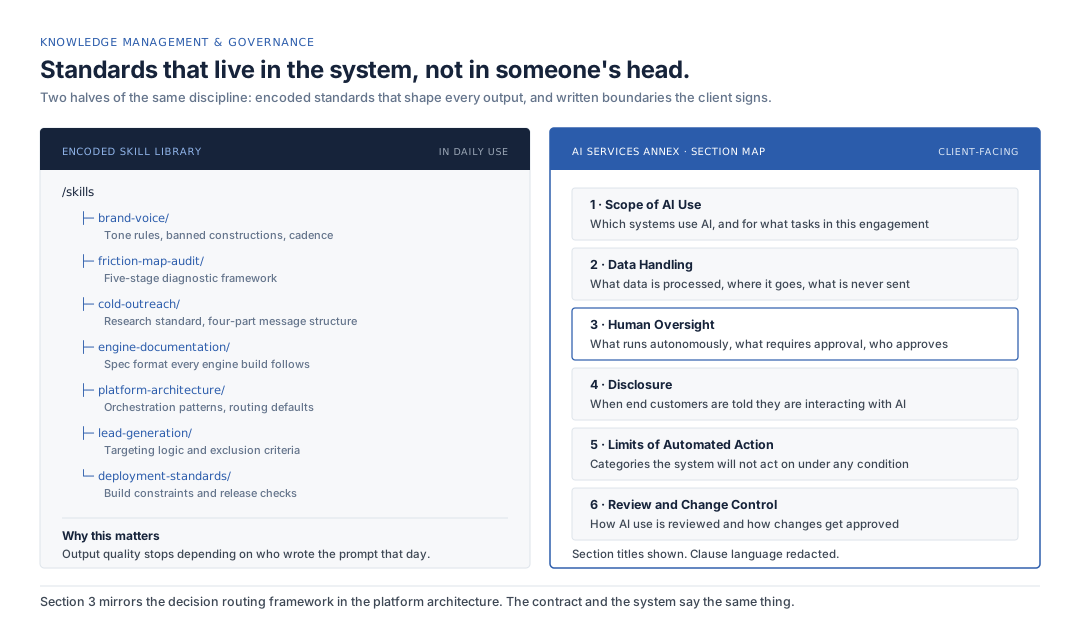
AI Services Governance Stack
A client-facing AI Services Annex, part of a full legal template stack (MSA, SOW, DPA, SLA) I built for AI service delivery. It defines in writing how AI is used in an engagement: data handling, disclosure, human oversight, and the boundaries of automated action.
Why it's relevant to you: most candidates will tell you governance matters. I'll hand you a signed-ready governance document I already use with clients. For a GovTech company, "we put AI boundaries in the contract" is the language your buyers speak.
The operational half lives in Section 01: the platform's decision routing framework defines what AI acts on, what it drafts, and what it escalates, with a default rule that low confidence means escalate.
What I won't pretend to have
You'll notice everything above is labeled with its real status. Same rule here. Two gaps, and how I'd close them.
No GovTech or public procurement experience
What I do have is Daimler Truck North America: brand work inside a heavily regulated industry where compliance, accountability, and institutional trust weren't optional. It's the closest thing I have to public sector expectations, and it's why I never learned to work the move-fast-and-apologize-later way.
HubSpot isn't in my daily stack
My work is platform-agnostic by design. Current stacks include Airtable, Zapier, n8n, Jobber, Housecall Pro, and GoHighLevel. I integrate into whatever a business already runs rather than forcing my preferred tools, and that's the same posture I'd bring to your stack.